NAD+ research continues to gain significant attention in modern biomedical and pharmaceutical studies due to the compound’s central role in cellular metabolism and biochemical processes. High-purity Nicotinamide Adenine Dinucleotide (NAD+) is widely utilized in laboratory environments, particularly within qualified research institutions focused on molecular biology, biochemistry, and pharmaceutical development.

NAD+ (Nicotinamide Adenine Dinucleotide) is a naturally occurring coenzyme present in all living cells. It functions primarily as a critical cofactor in redox reactions, helping transfer electrons from one molecule to another. This process is fundamental to cellular energy production, particularly in metabolic pathways such as glycolysis, the tricarboxylic acid (TCA) cycle, and oxidative phosphorylation. Because of its central involvement in energy metabolism, NAD+ has become a key molecule in advanced NAD+ research initiatives worldwide.
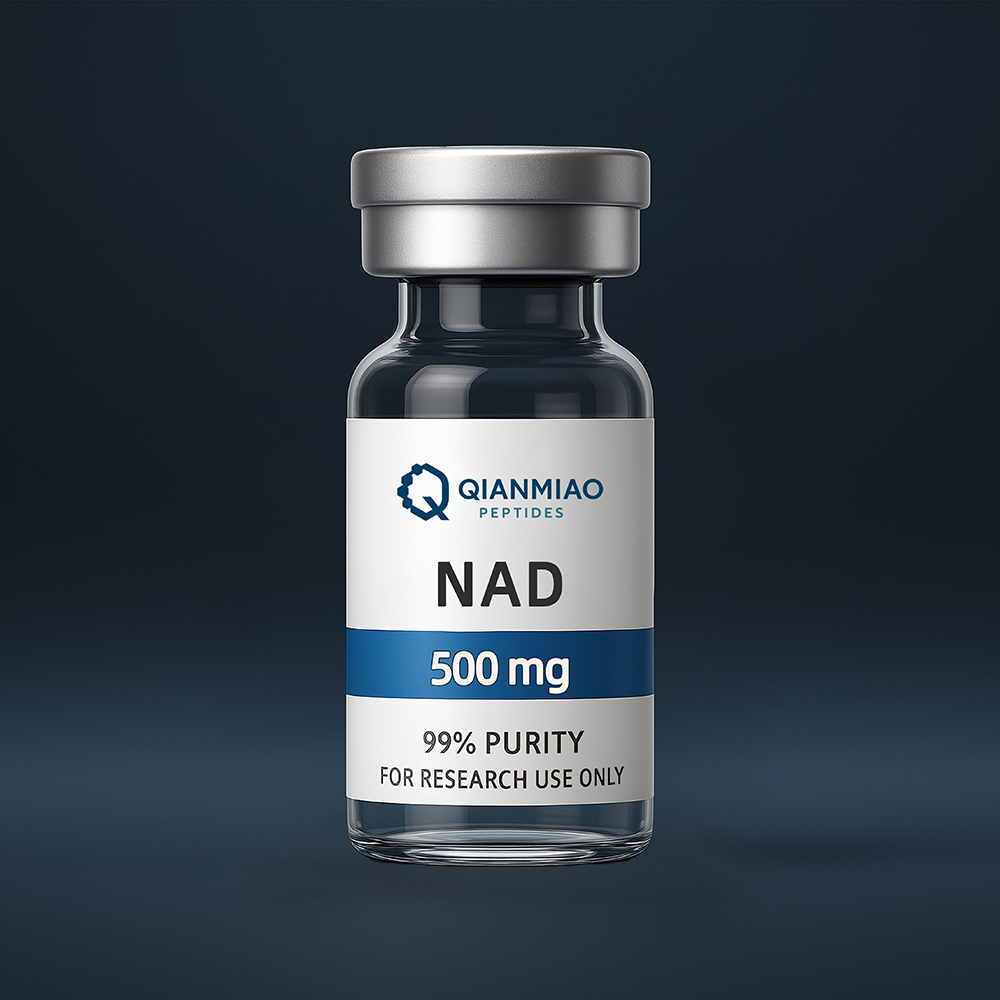
The 500 mg research-grade NAD+ specification is manufactured under strictly controlled quality conditions to meet pharmaceutical raw material standards. Production environments typically adhere to stringent quality control protocols to ensure high purity, consistency, and stability. Analytical testing procedures are applied to verify identity, purity level, moisture content, and overall chemical integrity. This ensures that the compound meets the rigorous requirements necessary for laboratory and pharmaceutical research applications.
High-purity NAD+ is particularly valuable in biochemical assays, enzyme kinetics studies, and cellular metabolism research. Scientists frequently use it in studies involving sirtuins, PARPs (poly ADP-ribose polymerases), and other NAD+-dependent enzymes. These enzymes play essential roles in DNA repair mechanisms, gene expression regulation, and cellular stress responses. By providing a reliable and consistent NAD+ source, researchers can obtain accurate and reproducible experimental data.
Another important area of NAD+ research includes investigations into cellular aging processes and mitochondrial function. Since NAD+ levels naturally fluctuate within cells, understanding its biochemical interactions helps researchers explore cellular signaling pathways and metabolic regulation. Research institutions rely on pharmaceutical-grade NAD+ raw material to conduct controlled experiments under standardized laboratory conditions.
The 500 mg packaging specification is designed to meet research-scale requirements. This format allows laboratories to manage precise measurements and maintain storage integrity. Typically, the compound is stored under recommended temperature and light-protected conditions to preserve stability. Proper handling procedures further ensure that the chemical properties remain consistent throughout its research lifecycle.
It is important to emphasize that this NAD+ product is intended exclusively for research purposes and as a pharmaceutical raw material for qualified institutions. It is not intended for direct human consumption, clinical use, or over-the-counter applications. Access is generally restricted to authorized laboratories, pharmaceutical companies, academic institutions, and research organizations operating under appropriate regulatory frameworks.
Quality manufacturing practices play a crucial role in supporting advanced NAD+ research. Controlled production environments minimize contamination risks and ensure batch-to-batch uniformity. Documentation, traceability, and compliance standards provide additional assurance for research institutions that depend on reliable raw materials for experimental accuracy.
As interest in metabolic science and pharmaceutical innovation continues to expand, the demand for high-purity NAD+ compounds remains strong. Reliable sourcing of research-grade NAD+ supports a wide range of scientific studies, from fundamental biochemical analysis to pharmaceutical formulation research.
In conclusion, 500 mg high-purity NAD+ represents a specialized research-grade compound manufactured under controlled quality standards for pharmaceutical research applications. Its role as a critical coenzyme in cellular metabolism makes it indispensable in ongoing NAD+ research initiatives. By providing consistent quality and strict research-only designation, this compound supports advanced scientific exploration within qualified institutions worldwide.